
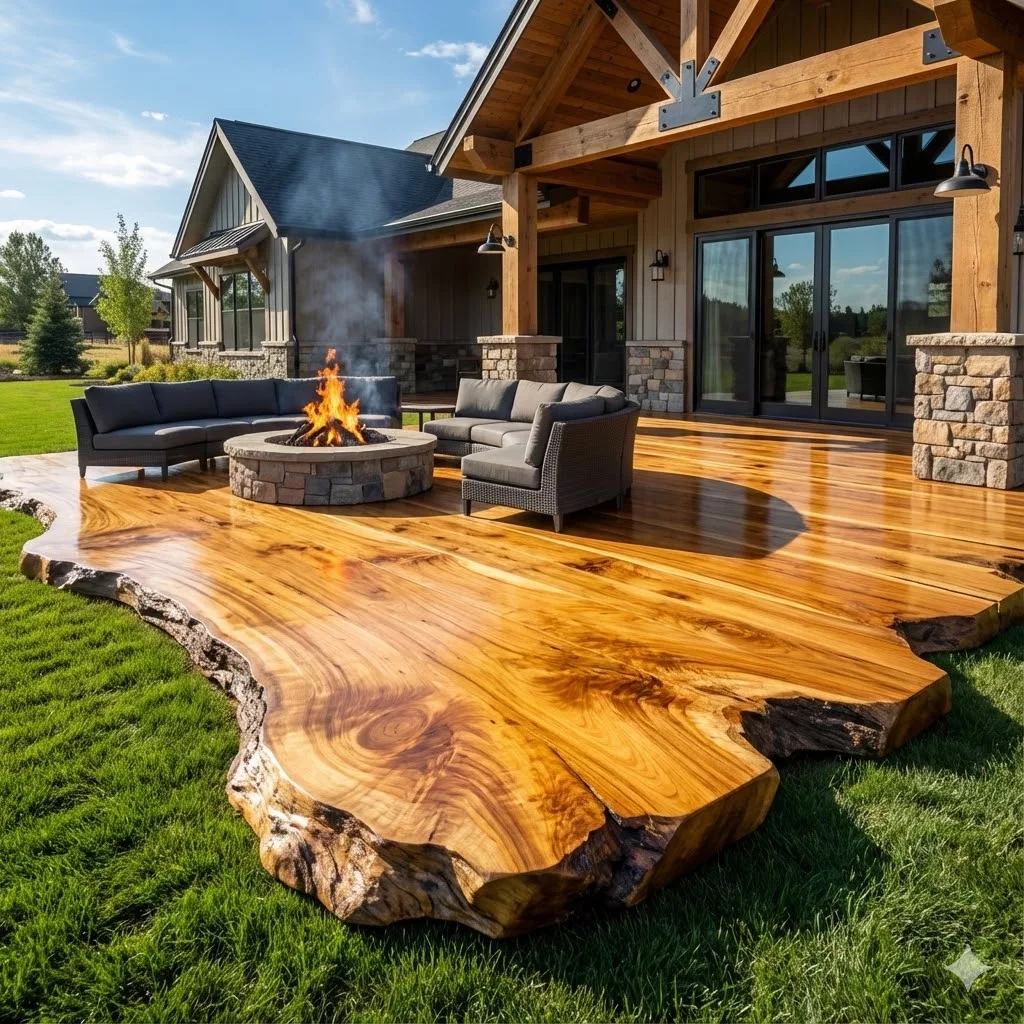
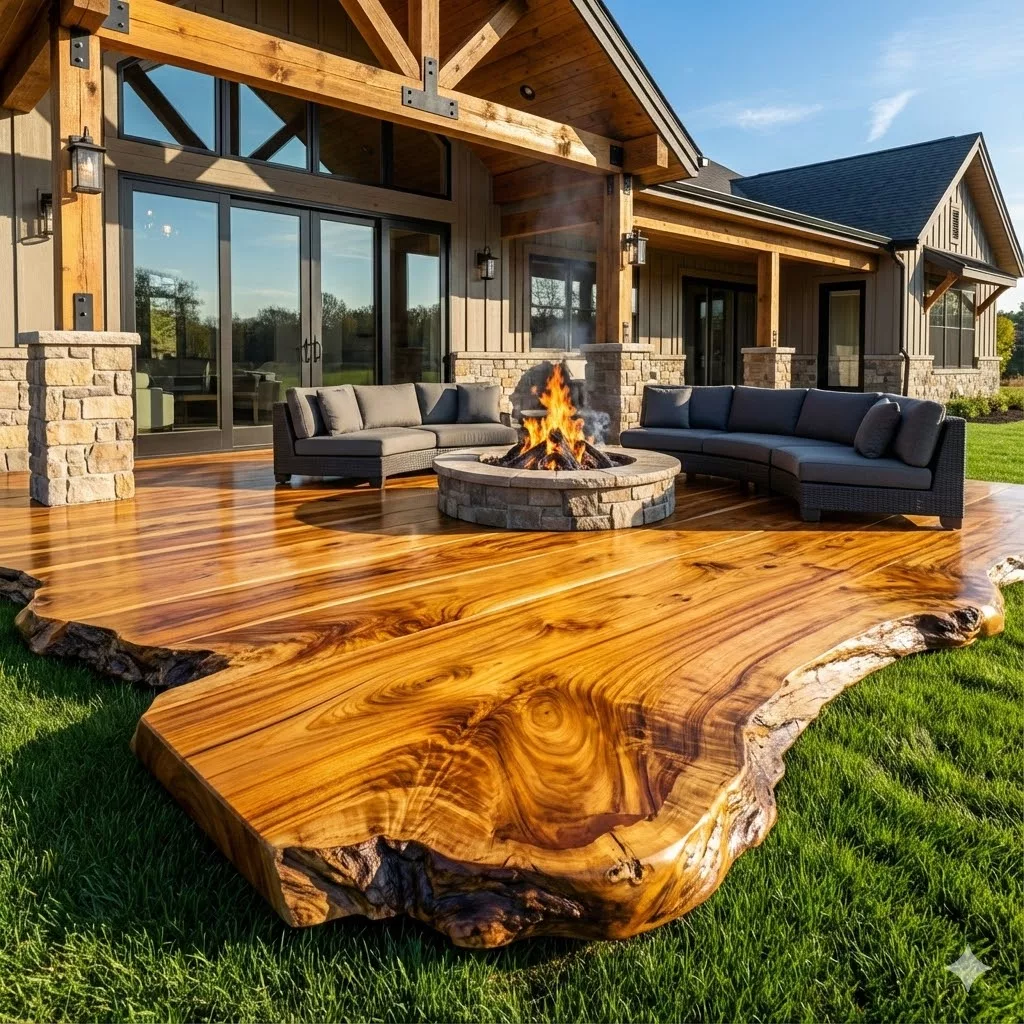
A wood slab patio brings natural beauty and rustic charm to any backyard. These stunning outdoor living spaces feature large, flat sections of wood arranged to create a functional and visually appealing patio surface. Whether you’re looking to create a cozy gathering spot or an elegant entertaining area, a wood slab patio offers endless possibilities for customization and style.
Contents
What is a Wood Slab Patio?
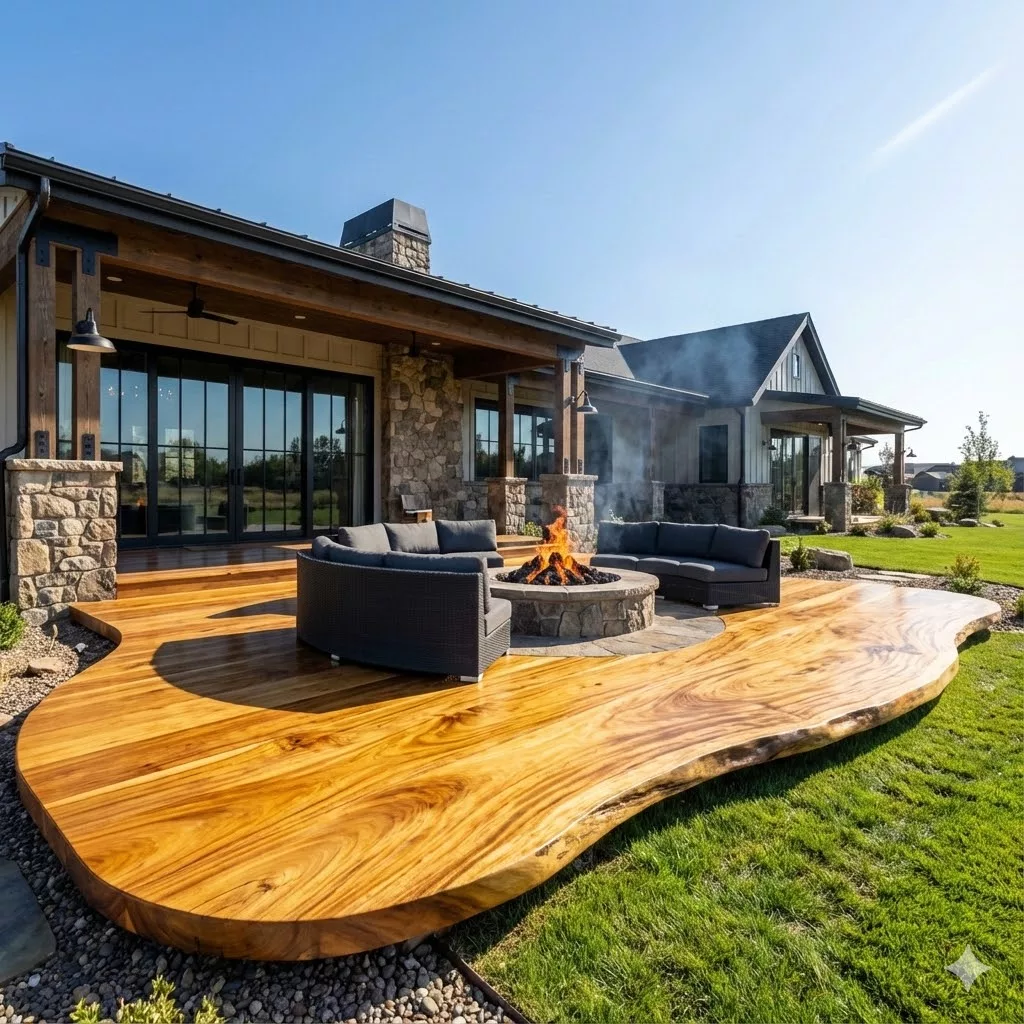
A wood slab patio uses thick, flat pieces of wood—typically cut from large tree trunks—as paving materials. These slabs showcase the wood’s natural grain patterns, knots, and character, creating a one-of-a-kind outdoor surface. Unlike traditional wooden decking, wood slab patios emphasize the raw, organic beauty of the material with minimal processing.
Benefits of Wood Slab Patios
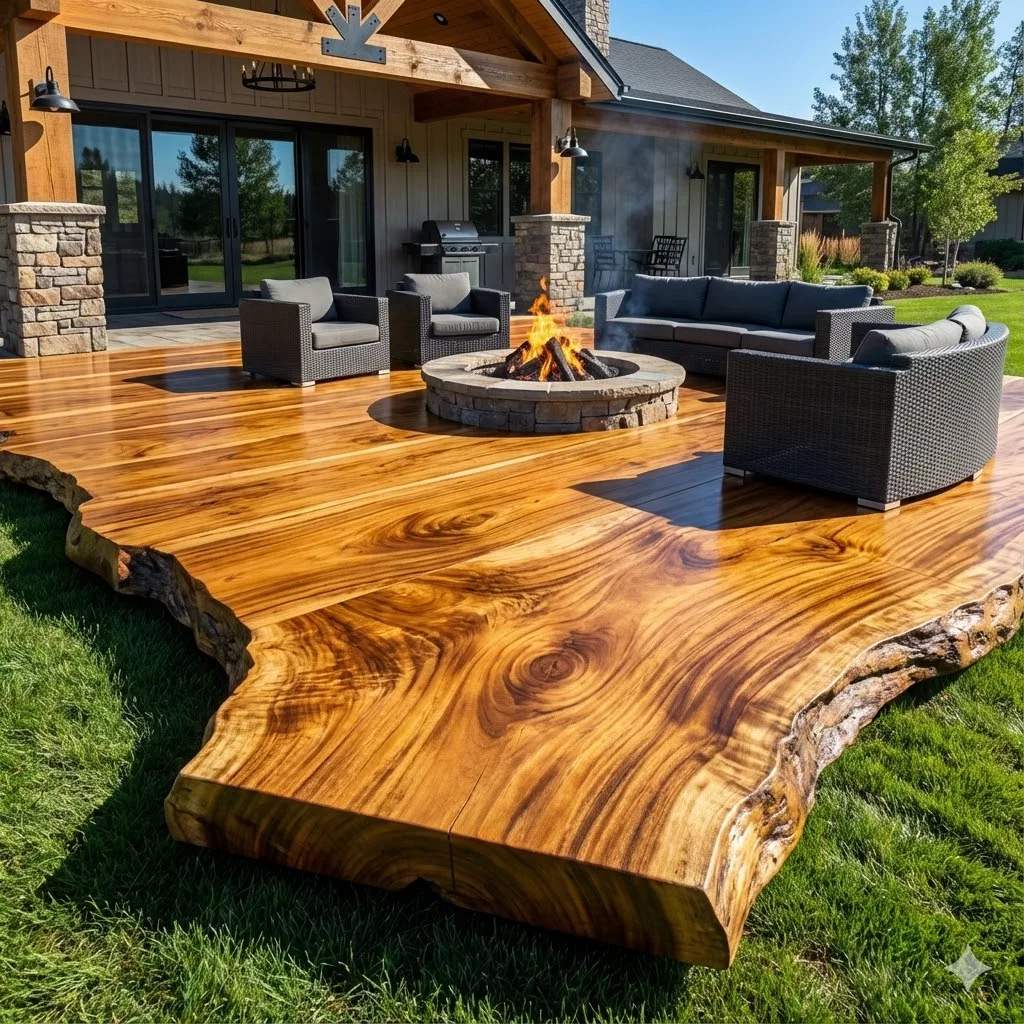
Natural Aesthetic Appeal: Each wood slab is unique, featuring distinct grain patterns and natural variations that add character to your outdoor space. The organic look complements gardens, landscaping, and natural surroundings beautifully.
Durability: When properly treated and maintained, quality hardwood slabs can last for many years. Species like cedar, redwood, and oak offer excellent weather resistance and structural integrity.
Sustainability: Using reclaimed or salvaged wood slabs is an eco-friendly choice that gives new life to fallen or removed trees. This approach reduces waste and minimizes environmental impact.
Versatility: Wood slabs work well in various design styles, from modern minimalist to rustic farmhouse. They can be arranged in countless patterns to suit your preferences.
Comfortable Surface: Unlike stone or concrete, wood provides a warmer, more comfortable surface that’s pleasant to walk on barefoot during warm weather.
Best Wood Types for Slab Patios
Hardwoods
- Cedar: Naturally resistant to rot and insects, with a pleasant aroma
- Redwood: Excellent durability and beautiful reddish tones
- Oak: Strong and long-lasting with attractive grain patterns
- Teak: Premium option with superior weather resistance
Treated Options
- Pressure-treated lumber: Budget-friendly and rot-resistant
- Thermally modified wood: Enhanced durability through heat treatment
Installation Process
Planning and Preparation
Start by measuring your patio area and determining how many wood slabs you’ll need. Consider the layout pattern and spacing between slabs. Proper planning prevents material waste and ensures a cohesive design.
Site Preparation
Excavate the area to a depth of 4-6 inches, creating a level base. Install landscape fabric to prevent weed growth, then add a layer of gravel for drainage. Top with a layer of sand to create a stable, level surface for your wood slabs.
Laying the Slabs
Arrange your wood slabs according to your chosen pattern, leaving small gaps between pieces for drainage and expansion. Level each slab carefully, adding or removing sand as needed. For stability, slabs should be at least 2-3 inches thick.
Finishing Touches
Fill gaps between slabs with gravel, pebbles, or ground cover plants like moss or creeping thyme. Apply a high-quality wood sealant to protect against moisture and UV damage.
Design Ideas and Patterns
Stepping Stone Style: Space wood slabs apart with grass, gravel, or mulch between them for a casual, garden path aesthetic.
Tight-Fit Pattern: Arrange slabs close together for a more traditional patio look with minimal gaps.
Mixed Materials: Combine wood slabs with stone, brick, or concrete pavers for added visual interest and texture contrast.
Geometric Layouts: Create patterns using slabs of varying sizes arranged in modern, geometric configurations.
Maintenance Tips
Regular maintenance keeps your wood slab patio looking beautiful and extends its lifespan:
- Clean regularly: Sweep away debris and wash with mild soap and water
- Reseal annually: Apply wood sealant or stain every 1-2 years
- Check for damage: Inspect for cracks, splits, or rot and address issues promptly
- Ensure drainage: Keep gaps clear and verify water drains properly
- Remove vegetation: Pull weeds growing between slabs to prevent moisture retention
Cost Considerations
Wood slab patio costs vary based on several factors:
- Wood species and quality
- Slab thickness and size
- Whether you use new or reclaimed wood
- DIY installation versus professional help
- Site preparation requirements
Expect to pay anywhere from $10-50 per square foot for materials, with labor adding additional costs if hiring professionals.
Is a Wood Slab Patio Right for You?
A wood slab patio is ideal if you:
- Appreciate natural, organic aesthetics
- Want a unique, customizable outdoor space
- Have access to quality hardwood or reclaimed materials
- Are willing to perform regular maintenance
- Prefer a warmer surface than stone or concrete
Consider alternatives if you’re in an extremely wet climate or need a completely maintenance-free solution.
Conclusion
A wood slab patio transforms your outdoor space into a natural retreat that combines beauty, functionality, and character. With proper planning, quality materials, and regular maintenance, your wood slab patio will provide years of enjoyment as a centerpiece for outdoor living and entertaining. Whether you choose a rustic stepping stone design or a polished modern layout, the natural elegance of wood slabs creates an inviting atmosphere that connects your home to nature.