
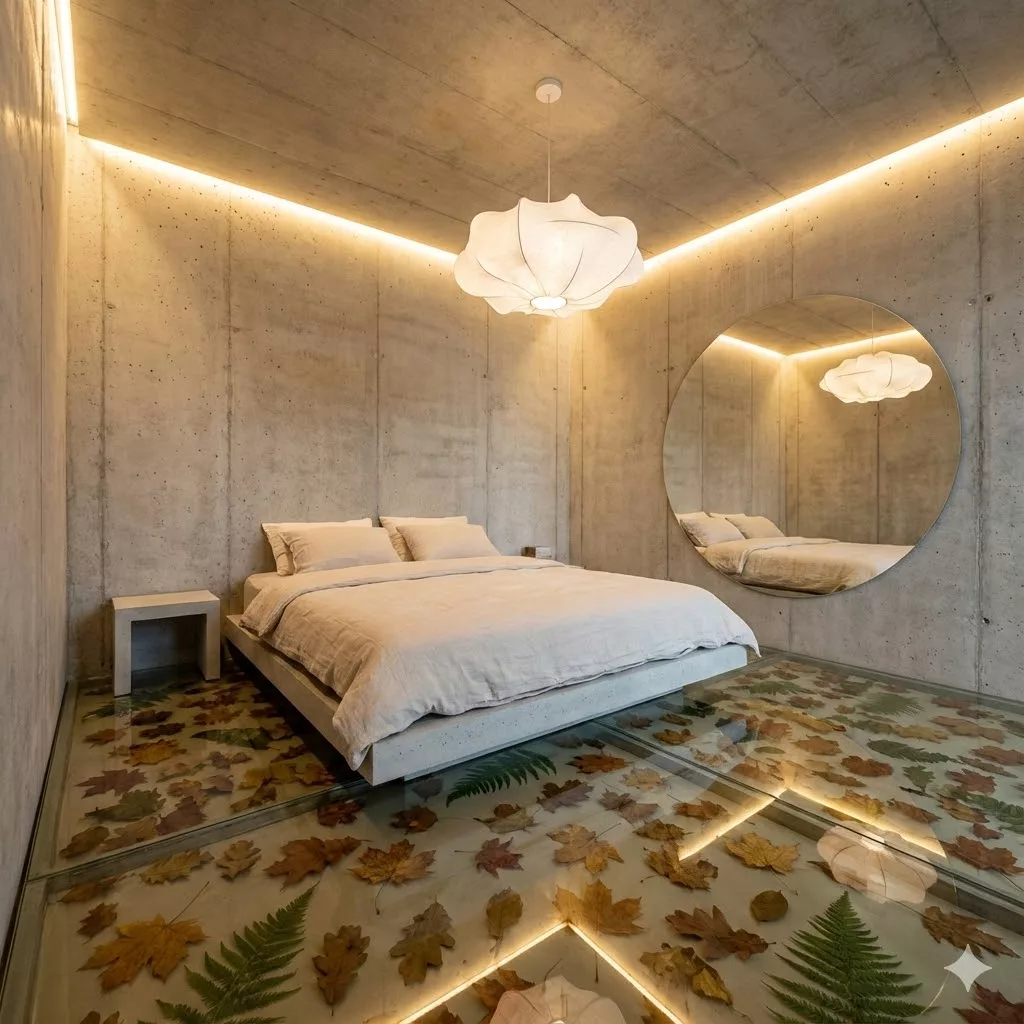
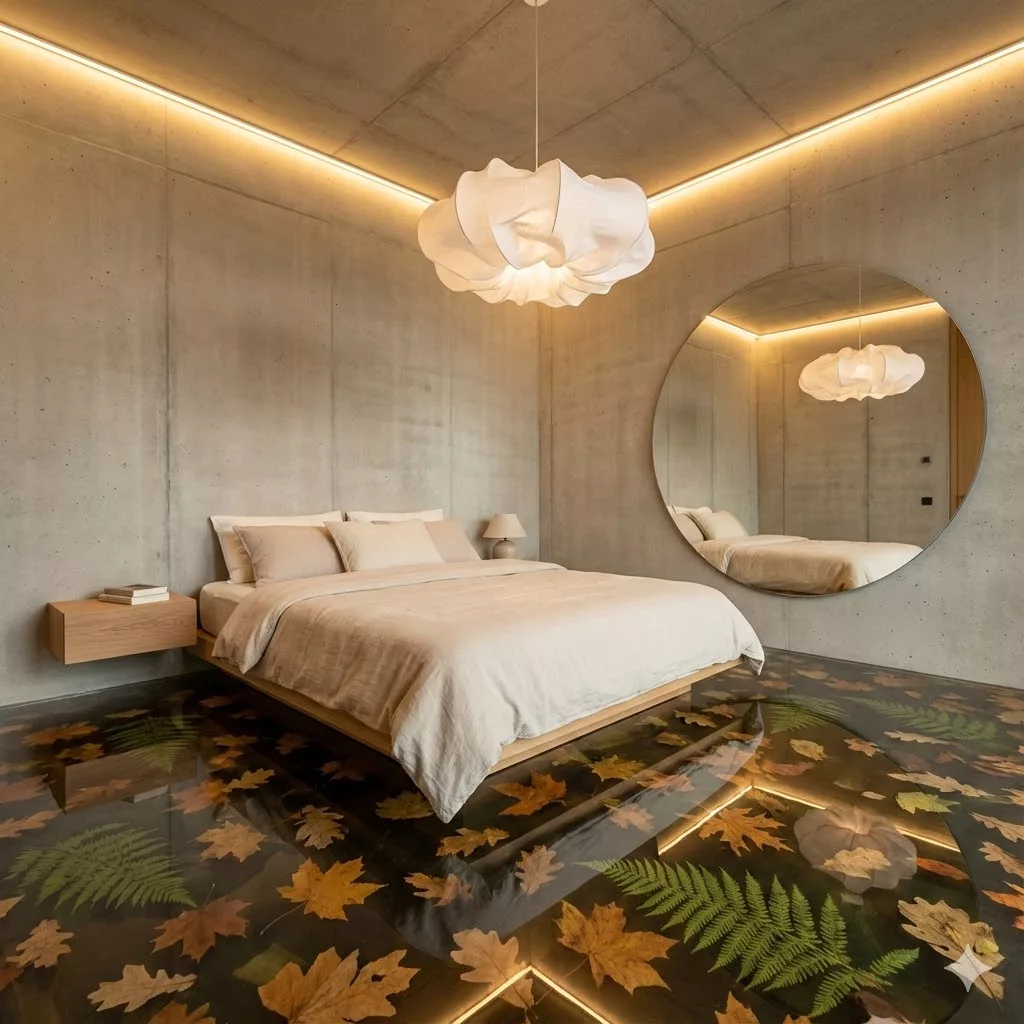
A bedroom with leaf epoxy floor creates a breathtaking connection to nature while delivering the durability and easy maintenance of modern resin flooring. By encasing real or artificial leaves in crystal-clear epoxy resin, you can transform your bedroom into a serene, botanical sanctuary that showcases the intricate beauty of foliage beneath a smooth, glass-like surface. This innovative flooring trend combines artistry with functionality, offering a truly unique and personalized bedroom design.
Contents
- 1 What is a Leaf Epoxy Floor?
- 2 Why Choose Leaf Epoxy Flooring for Your Bedroom?
- 3 Best Leaf Types for Bedroom Epoxy Floors
- 4 Design Styles for Bedroom Leaf Epoxy Floors
- 5 Installation Process for Bedroom Leaf Epoxy Floors
- 6 Color Schemes and Bedroom Coordination
- 7 Maintenance and Care for Bedroom Leaf Epoxy Floors
- 8 Cost Considerations for Leaf Epoxy Bedroom Floors
- 9 DIY vs. Professional Installation
- 10 Potential Challenges and Solutions
- 11 Health and Safety Considerations
- 12 Combining Leaf Epoxy Floors with Bedroom Design Elements
- 13 Is a Leaf Epoxy Floor Right for Your Bedroom?
- 14 Conclusion
What is a Leaf Epoxy Floor?
A leaf epoxy floor features natural or preserved leaves embedded within layers of transparent epoxy resin. The leaves are carefully arranged on a prepared floor surface and then sealed beneath multiple coats of liquid epoxy that hardens into a durable, protective finish. The result is a stunning three-dimensional effect that preserves the leaves’ colors, textures, and details while creating a seamless, waterproof floor surface perfect for bedroom environments.
Why Choose Leaf Epoxy Flooring for Your Bedroom?
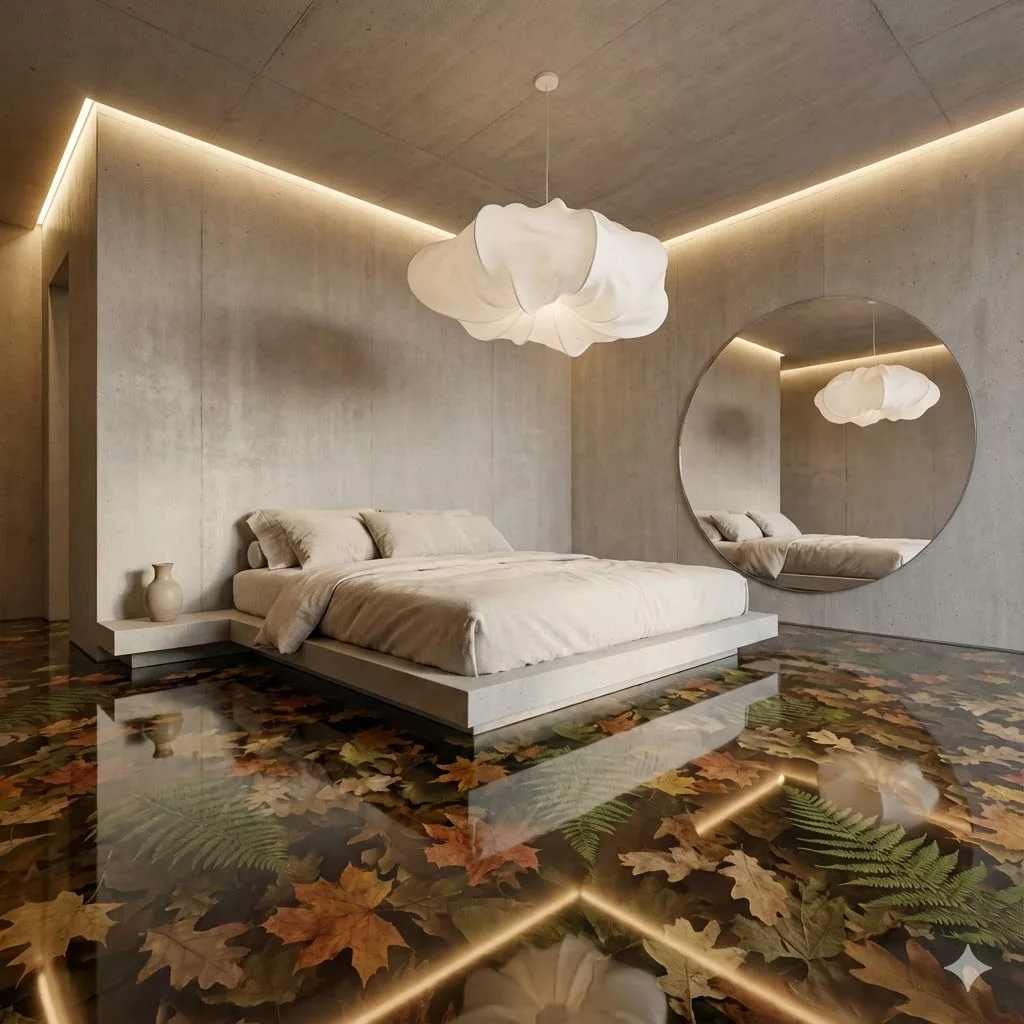
Unique Artistic Expression: Every leaf epoxy floor is a one-of-a-kind masterpiece. The natural variations in leaf shapes, colors, and arrangements ensure your bedroom floor is completely unique and reflects your personal style.
Biophilic Design Benefits: Bringing natural elements indoors through biophilic design has proven psychological benefits, including reduced stress, improved mood, and enhanced relaxation—ideal qualities for a bedroom sanctuary.
Durable and Long-Lasting: Epoxy resin creates an exceptionally strong surface that resists scratches, stains, and daily wear. When properly installed, leaf epoxy floors can last 15-20 years or more with minimal maintenance.
Easy Maintenance: The seamless surface requires only regular sweeping and occasional damp mopping. Unlike carpet or wood flooring, there are no grout lines, seams, or fibers to trap dust and allergens.
Allergy-Friendly: Epoxy floors don’t harbor dust mites, pet dander, or other allergens that accumulate in traditional bedroom flooring materials, making them excellent for allergy sufferers.
Customizable Design: Choose from countless leaf types, colors, arrangements, and epoxy tints to create the perfect atmosphere for your bedroom, from vibrant tropical to subtle minimalist designs.
Best Leaf Types for Bedroom Epoxy Floors
Natural Leaf Options
Skeleton Leaves: Delicate, lace-like leaves with visible vein structures create an ethereal, romantic atmosphere. Available in natural ivory or dyed colors.

In the world of cozy bedding and playful home accessories, fruit sleeping bags have emerged as a delightful trend that's Read more

If you're a hamster owner looking to enhance your pet's living space, you've likely come across the adorable and increasingly Read more

When it comes to furniture that perfectly balances whimsy, comfort, and functionality, the plush hippo sleeping chair stands in a Read more

What Is a Fluffy Dog Sleeping Bag? A fluffy dog sleeping bag is an adorable, puppy-themed sleeping bag designed to Read more
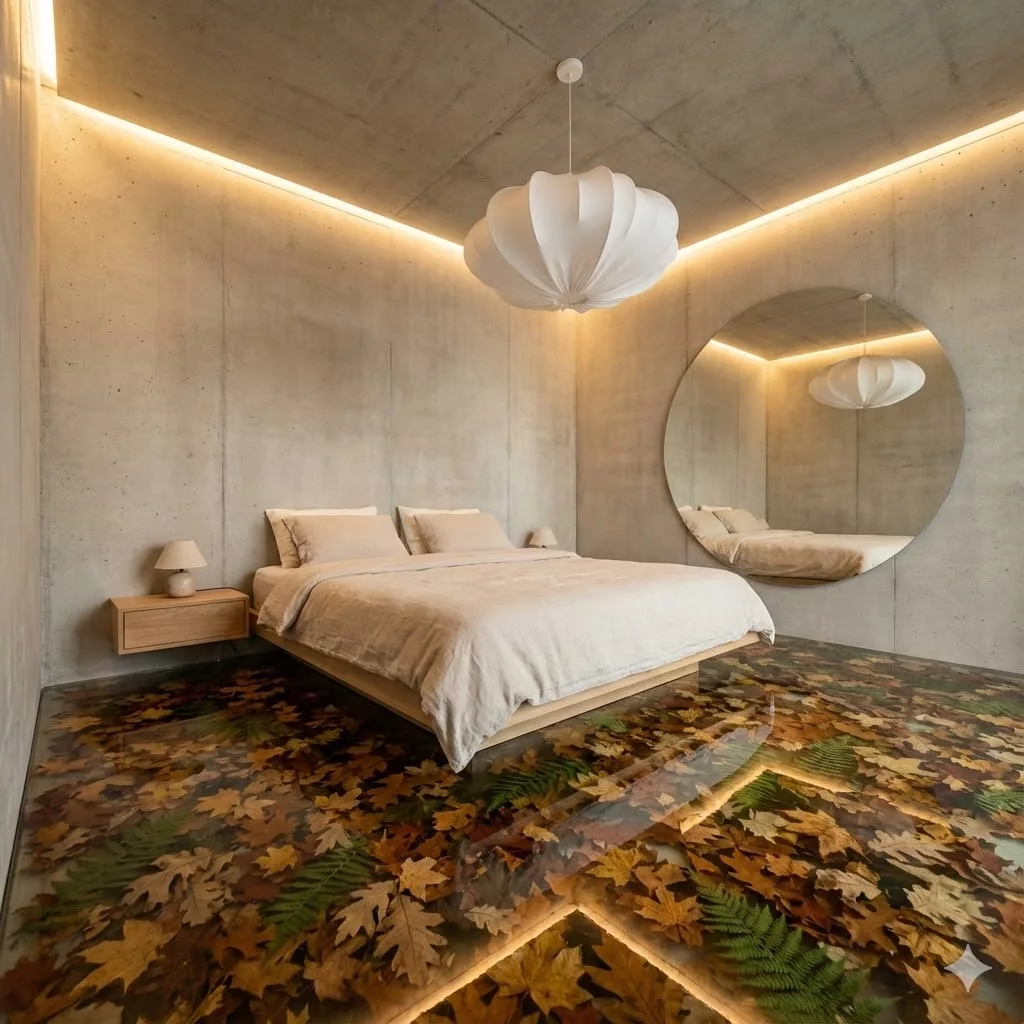
Ferns: Feathery fronds add texture and movement. Their intricate patterns create visual interest without overwhelming the space.
Maple Leaves: Classic shape with beautiful color variations, especially stunning when using autumn-colored leaves for warm, cozy bedroom ambiance.
Palm Fronds: Tropical leaves bring resort-style luxury and create a calming, vacation-inspired bedroom retreat.
Eucalyptus: Silver-green leaves with elegant, elongated shapes perfect for modern or minimalist bedroom designs.
Ginkgo: Distinctive fan-shaped leaves add architectural interest and work well in contemporary spaces.
Mixed Varieties: Combine different leaf types for depth, texture, and visual complexity that keeps the eye engaged.
Preserved vs. Fresh Leaves
Preserved Leaves: Treated to maintain color and flexibility, these leaves are more predictable and easier to work with during installation. They resist decay and maintain appearance over time.
Fresh Leaves: Must be completely dried before encasing in epoxy to prevent decay, discoloration, or moisture issues. Requires more preparation but offers authentic natural beauty.
Artificial Leaves: High-quality synthetic leaves provide consistent color, durability, and easier installation while eliminating concerns about organic decomposition.
Design Styles for Bedroom Leaf Epoxy Floors
Scattered Natural Look
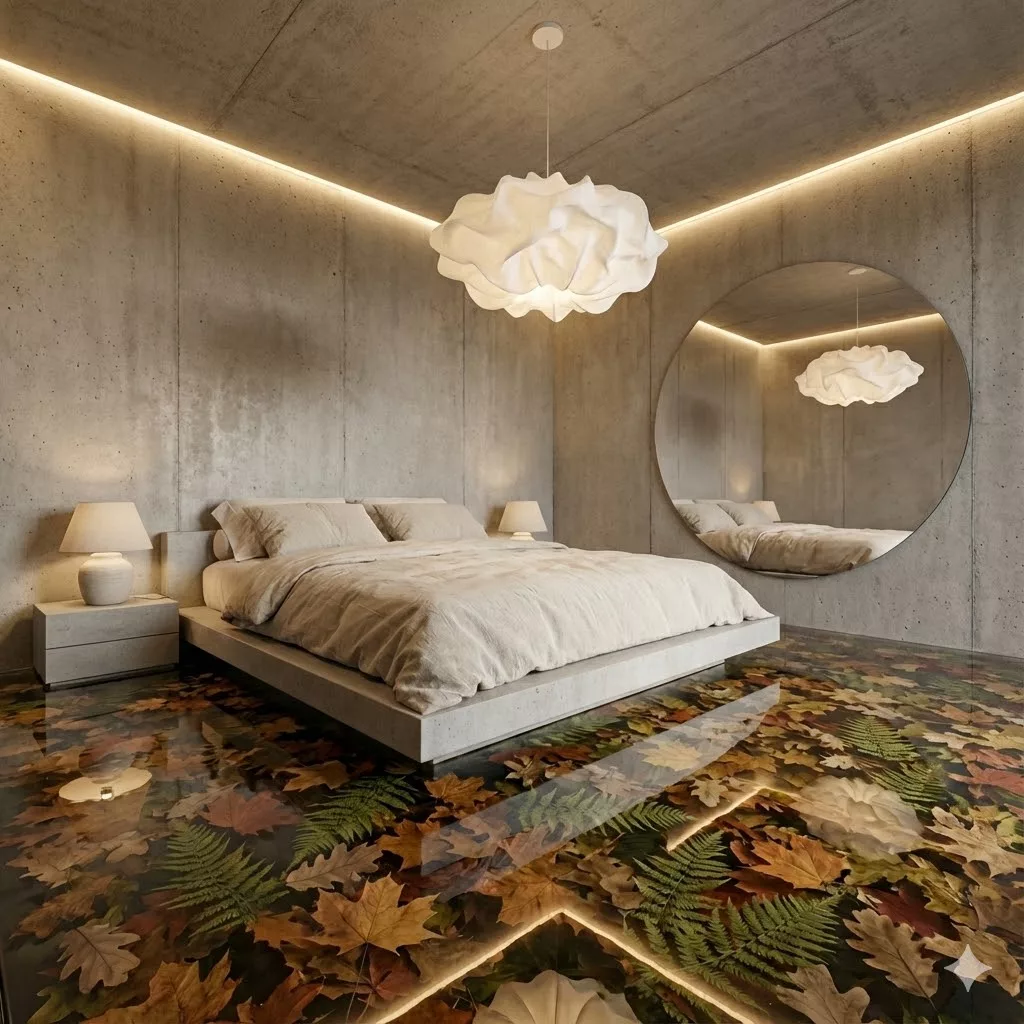
Randomly arrange leaves across the floor surface to mimic a forest floor covered in fallen foliage. This organic approach creates a relaxed, nature-inspired atmosphere perfect for restful bedrooms.
Gradient Pattern
Transition from dense leaf coverage at one end of the room to sparse or no leaves at the other, creating visual flow and making spaces feel larger. Ideal for smaller bedrooms.
Border Design
Frame the room’s perimeter with leaf arrangements while keeping the center clear or minimally decorated. This approach defines the space and draws the eye around the room.
Artistic Arrangements
Create intentional patterns like spirals, waves, or geometric formations with leaves. This contemporary approach works beautifully in modern or eclectic bedroom designs.
Monochromatic Theme
Use leaves in a single color family (all greens, all golds, or all whites) for sophisticated, cohesive design that complements minimalist or modern bedroom aesthetics.
Seasonal Theme
Incorporate autumn leaves for warm, cozy vibes, or spring greens for fresh, energizing atmospheres that reflect your preferred seasonal mood.
Installation Process for Bedroom Leaf Epoxy Floors
Planning and Preparation
Begin by selecting your leaf types, colors, and overall design concept. Calculate the square footage of your bedroom and order 20-30% more leaves than calculated to account for overlap and design flexibility. Plan your layout on paper or digitally before beginning installation.
Floor Surface Preparation
Remove all existing flooring materials and furniture from the bedroom. The concrete or subfloor must be completely clean, dry, level, and free from cracks or damage. Fill any imperfections with appropriate floor repair compounds and allow to cure fully. Sand or grind concrete surfaces to improve epoxy adhesion.
Moisture Testing
Test for moisture issues, especially important in ground-floor or basement bedrooms. Excessive moisture will compromise epoxy adhesion and cause future failures. Apply moisture barriers if necessary.
Leaf Preparation
If using fresh leaves, press and dry them completely for 2-4 weeks between heavy books or in a flower press. Any residual moisture will cause decay beneath the epoxy. Clean preserved or artificial leaves to remove dust and oils.
Applying Primer Coat
Apply a clear epoxy primer coat to seal the substrate and create a foundation for leaf adhesion. This base layer prevents air bubbles from forming under leaves and ensures proper bonding.
Leaf Placement
Working in sections, arrange leaves according to your design plan while the primer coat remains tacky. Press each leaf firmly to eliminate air pockets beneath. Use tweezers for precise placement and adjustments. Work methodically to maintain your intended pattern.
Sealing Coat
Once all leaves are positioned, apply a sealing coat of epoxy over the leaves. This coat locks leaves in place and prevents floating or shifting during the final pour. Allow to cure according to manufacturer specifications.
Final Flood Coat
Mix and pour the final clear epoxy flood coat over the entire floor surface. Use enough epoxy to completely cover all leaves and create a smooth, level finish—typically 1/8 to 1/4 inch thickness. Work carefully to achieve even coverage.
Removing Air Bubbles
Immediately after pouring, use a propane torch or heat gun to gently pass over the wet epoxy surface. The heat releases trapped air bubbles, ensuring a crystal-clear finish.
Curing Time
Allow the floor to cure undisturbed for 24-72 hours before walking on it, and wait 7 days before returning furniture to the bedroom. Full cure may take up to 30 days for maximum hardness and durability.
Color Schemes and Bedroom Coordination
Green Leafy Haven
Natural green leaves create a refreshing, calming environment. Pair with white or cream walls, natural wood furniture, and earth-tone textiles for a cohesive nature-inspired bedroom.
Metallic Elegance
Gold, silver, or copper-toned leaves add glamour and sophistication. Coordinate with metallic accents in lighting fixtures, mirrors, and decorative accessories for a luxurious feel.
Monochrome Serenity
White or pale green skeleton leaves create a subtle, peaceful backdrop. This approach works beautifully with minimalist design and allows other bedroom elements to shine.
Autumn Warmth
Deep reds, oranges, and golden yellows create cozy, intimate spaces. Perfect for bedrooms where you want to feel wrapped in warmth and comfort.
Tinted Epoxy
Add color tints to the epoxy itself—soft blues for tranquility, pale greens for freshness, or warm ambers for coziness—to enhance your leaf design and create cohesive color stories.
Maintenance and Care for Bedroom Leaf Epoxy Floors
Daily Care
Sweep or vacuum regularly using soft-bristle attachments to remove dust and debris. Use microfiber dust mops for quick daily cleaning that won’t scratch the epoxy surface.
Weekly Cleaning
Damp mop with warm water and pH-neutral cleaner specifically designed for epoxy floors. Avoid harsh chemicals, ammonia-based products, or abrasive cleaners that can dull or damage the finish.
Protecting the Surface
Place felt pads under all furniture legs to prevent scratching when moving pieces. Use area rugs in high-traffic zones near doorways or around the bed to minimize wear patterns.
Maintaining Shine
Apply a specialized epoxy floor polish every 6-12 months to maintain the glossy, glass-like appearance. This also adds an extra protective layer against minor scratches and scuffs.
Addressing Scratches
Minor scratches can often be buffed out with specialized epoxy polishing compounds. Deeper scratches may require professional repair or applying a fresh topcoat.
Cost Considerations for Leaf Epoxy Bedroom Floors
Several factors influence the total cost of a bedroom leaf epoxy floor:
- Room size: Larger bedrooms require more materials but may have lower per-square-foot costs
- Leaf type and quantity: Exotic or preserved leaves cost more than common varieties
- Epoxy quality: Premium epoxies with UV protection and superior clarity cost more but deliver better results
- Labor: Professional installation typically costs $12-30 per square foot
- Surface preparation: Extensive floor repairs or leveling add to total costs
- Design complexity: Intricate patterns require more time and skilled labor
Expect total costs ranging from $20-50 per square foot for professional installation, including materials and labor. DIY projects can reduce costs to $8-20 per square foot but require significant skill and time investment.
DIY vs. Professional Installation
DIY Installation Considerations
Ambitious DIYers with renovation experience can attempt leaf epoxy floors. Benefits include cost savings and complete creative control. However, epoxy flooring requires precise mixing ratios, proper temperature control, careful application techniques, and quick work before epoxy begins curing. Mistakes can be costly and difficult to fix.
Professional Installation Benefits
Experienced flooring contractors ensure proper surface preparation, correct epoxy formulation and mixing, expert leaf placement and design execution, bubble-free application, and flawless final finish. Professionals also typically provide warranties and have specialized tools for optimal results.
Potential Challenges and Solutions
Yellowing Over Time: Use high-quality, UV-resistant epoxy formulations to prevent discoloration from sunlight exposure. This is especially important for bedrooms with large windows or skyletal lighting.
Air Bubbles: Achieve bubble-free floors through proper mixing techniques, optimal temperature control (70-85°F ideal), and thorough heat gun treatment immediately after pouring.
Leaf Discoloration: Ensure leaves are completely dry before installation and use preserved leaves for guaranteed color retention. Fresh organic leaves may fade or change color over time.
Uneven Surface: Proper surface leveling during preparation prevents pooling and ensures uniform epoxy thickness across the bedroom floor.
Edge Gaps: Carefully seal perimeters where floor meets walls using appropriate edging techniques to prevent epoxy leakage during installation.
Health and Safety Considerations
During Installation
Work in well-ventilated spaces and wear appropriate personal protective equipment including respirators, gloves, and eye protection. Epoxy fumes can be strong during application and curing.
After Curing
Once fully cured, epoxy floors are inert and safe for bedroom use. They emit no VOCs and create no health hazards for sleeping spaces. Choose low-VOC or zero-VOC epoxy products for the healthiest bedroom environment.
Allergy Benefits
The non-porous epoxy surface doesn’t trap allergens, dust mites, or pet dander, making leaf epoxy floors excellent choices for allergy sufferers seeking cleaner bedroom air quality.
Combining Leaf Epoxy Floors with Bedroom Design Elements
Furniture Selection
Light-colored or natural wood furniture prevents overwhelming the visual impact of your leaf floor. Keep furniture minimal to let the floor remain the focal point, or choose pieces that complement your leaf colors.
Wall Treatments
Neutral wall colors allow the floor to shine. Soft whites, creams, grays, or sage greens provide complementary backgrounds without competing for attention. Consider one accent wall in a coordinating color from your leaf palette.
Lighting Choices
Proper lighting enhances the depth and clarity of leaf epoxy floors. Install dimmer switches for ambiance control, use warm-toned bulbs for cozy atmosphere, and position floor lamps to highlight the floor’s three-dimensional effect.
Textile Coordination
Choose bedding, curtains, and rugs that harmonize with your leaf colors. Natural fiber textiles like linen, cotton, and wool reinforce the organic aesthetic and create cohesive nature-inspired design.
Is a Leaf Epoxy Floor Right for Your Bedroom?
This flooring option is ideal if you:
- Appreciate unique, artistic, nature-inspired design
- Want durable, low-maintenance bedroom flooring
- Value allergy-friendly surfaces
- Have budget for professional installation or advanced DIY skills
- Seek a permanent design statement
- Enjoy bringing natural elements indoors
Consider alternatives if you prefer traditional flooring, desire easily changeable design, need immediate installation, or prefer soft surfaces like carpet underfoot.
Conclusion
A bedroom with leaf epoxy floor transforms your personal sanctuary into an artistic masterpiece that celebrates nature’s beauty while delivering practical benefits of modern flooring technology. Whether you choose subtle skeleton leaves for minimalist elegance or vibrant tropical foliage for bold statement-making, leaf epoxy floors create restful, inspiring environments perfect for relaxation and rejuvenation. With proper installation and minimal maintenance, your bedroom leaf epoxy floor will remain a stunning focal point that brings daily joy and connection to the natural world for decades to come.
In the world of cozy bedding and playful home accessories, fruit sleeping bags have emerged as a delightful trend that's Read more
If you're a hamster owner looking to enhance your pet's living space, you've likely come across the adorable and increasingly Read more
When it comes to furniture that perfectly balances whimsy, comfort, and functionality, the plush hippo sleeping chair stands in a Read more
What Is a Fluffy Dog Sleeping Bag? A fluffy dog sleeping bag is an adorable, puppy-themed sleeping bag designed to Read more